Employee Wellbeing Platform Directory: Compare UK Providers
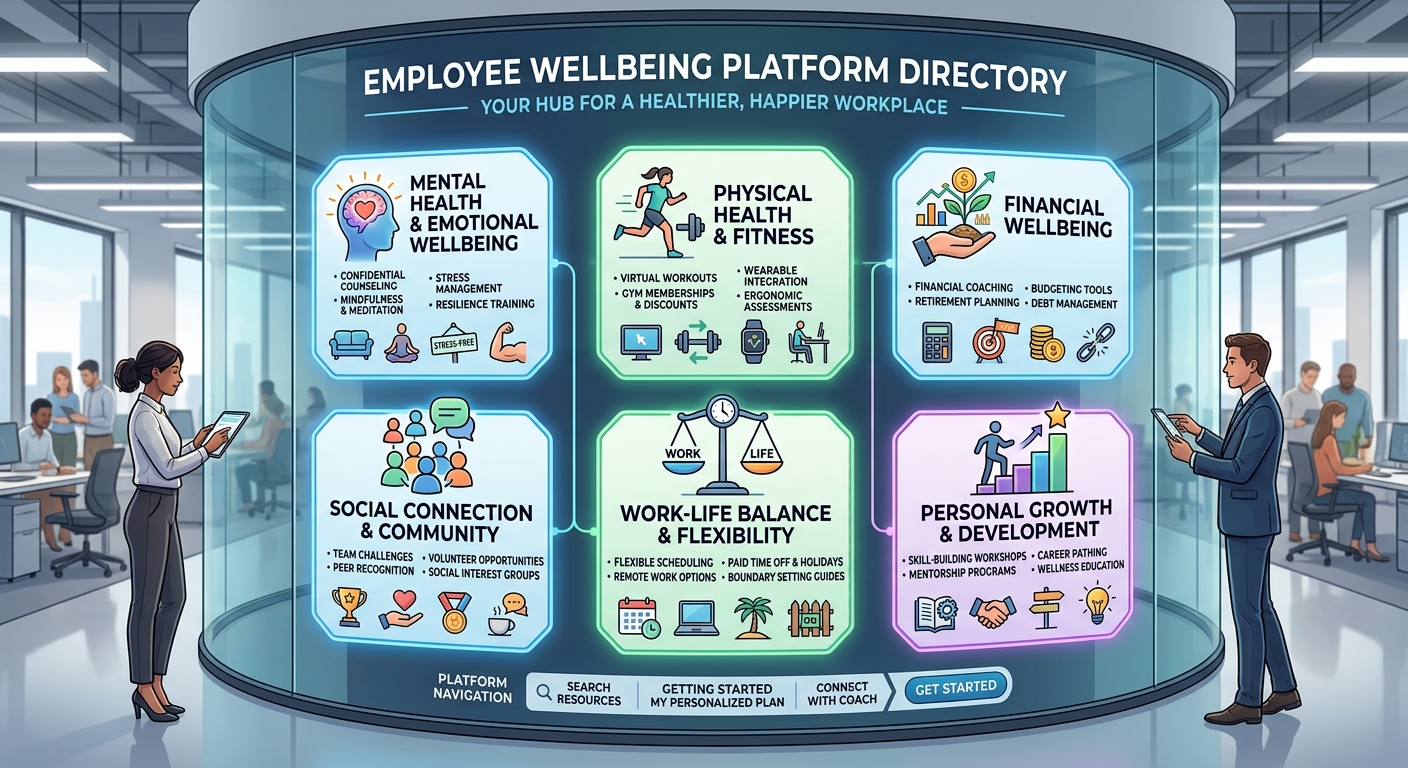

Employee wellbeing platform comparison table
This directory compares 15 employee wellbeing platforms available to UK employers. Pricing models are indicative when providers do not publish figures.
How to read this directory
Use each category label to identify the type of support you need. Whole-person prevention platforms combine mental health and physical health support with workforce risk data to help employers identify concerns early. EAPs provide confidential counselling and escalation support, while occupational health services assess how health affects someone’s ability to work.
Wellbeing apps focus on accessible activities or content for areas such as stress, sleep, and mental health. Absence and workforce analytics tools help HR record leave, identify patterns, and manage cases. Musculoskeletal services assess or support concerns involving muscles, joints, and bones. Gamified engagement platforms use challenges, points, or rewards to encourage participation.
Some providers cover several categories. Check the profile when a table label describes only the provider’s main use case.
Whole-person prevention platforms
Whole-person prevention platforms help employers identify health risks early and support employees across connected areas of wellbeing.
Champion Health
Champion Health combines mental health support, physical health services, and workforce risk analytics within one employee platform. Nexa provides digital musculoskeletal triage with clinical input. The wider Champion Health platform also covers sleep, financial wellbeing, and lifestyle behaviours.
Champion Health suits employers that want to identify preventable health concerns and understand workforce needs before selecting support. Champion Health’s Workforce Health Risk Assessment helps HR leaders examine associations between presenteeism and reported mental health or musculoskeletal concerns. HR leaders can use those findings to plan targeted support.
Champion Health combines capabilities that narrower products provide separately. Mental health apps generally focus on content and self-guided support. EAP and occupational health providers focus on services such as counselling, referrals, case management, and clinical assessment. Absence tools primarily record and analyse time away from work. Champion Health brings prevention, employee support, clinical MSK triage, and workforce insight into one platform.
EAP and occupational health providers
EAP and occupational health providers support employees when health concerns emerge, typically through counselling, assessment, referral, and rehabilitation services.
Health Assured
Health Assured combines an employee assistance programme with occupational health support. It suits employers seeking a central service for counselling, practical guidance, and help managing health-related absence. Health Assured’s EAP model gives employees one route to counselling, practical guidance, and escalation support. Employers can use the service as an initial route for employees who need confidential support or escalation after a concern has surfaced.
PAM Wellness
PAM Wellness provides occupational health and employee assistance services, with a particular focus on rehabilitation. It suits employers that need professional support for employees experiencing illness, injury, or extended absence. Rehabilitation services can help employers assess an employee’s needs and plan appropriate workplace support. PAM Wellness suits buyers prioritising recovery, return-to-work planning, and individual case support.
Optima Health
Optima Health provides occupational health services for employers that need clinical input on workplace health concerns. Optima Health suits employers seeking external support for health assessments, employee referrals, and workplace adjustment decisions. Its differentiator is the scope of its occupational health provision rather than a standalone wellbeing app. Employers can use Optima Health when a case requires professional assessment and guidance.
Mental health and wellbeing apps
Mental health and wellbeing apps give employees direct access to stress relief, mental health education, and routes into further support.
Unmind
Unmind provides a workplace mental health platform with employee tools, learning resources, and employer insights. It suits employers seeking a dedicated mental health benefit rather than a broader physical health or benefits service. Its workplace focus distinguishes it from consumer meditation apps. Employers that also need musculoskeletal services or wider health risk analytics should confirm whether separate provision is required.
Headspace for Work
Headspace for Work brings Headspace’s guided meditation and mindfulness offer into an employer setting, with a clear focus on stress relief. The service suits buyers that want a familiar, self-guided resource employees can use independently at work or at home. Headspace’s established consumer brand may make the service more familiar to employees at launch. Its scope centres on mindfulness rather than physical health services or workforce risk analysis.
Calm Business
Calm Business provides employer access to Calm’s meditation and stress relief offer. The service suits organisations seeking a straightforward resource for relaxation and regular self-directed use, especially when meditation is the primary requirement. Calm’s established consumer brand may give employees a familiar entry point. The offer concentrates on mindfulness and stress management, so buyers needing clinical pathways or broader workforce health data may require additional services.
JAAQ
JAAQ provides health information through videos in which experts and people with lived experience answer common questions. Its question-led interface helps employees navigate topics and find relevant signposting. JAAQ suits employers seeking accessible mental health education rather than meditation-led content. Its expert-led video format distinguishes the service, while employers should confirm the available referral and clinical escalation pathways.
Absence and workforce analytics tools
Absence and workforce analytics tools help you record leave, identify absence patterns, and manage related HR administration.
e-days
e-days provides absence management and leave tracking software for employers seeking consistent records and clearer reporting. The software suits HR leaders who prioritise consistent administration, absence reporting, and manager access to leave data. Its Bradford Factor tracking helps you identify repeated short absences that may require review, although the score should inform a wider conversation rather than determine action by itself.
GoodShape
GoodShape combines absence management with workforce health analytics and support for managing employee health cases. The platform suits larger employers seeking detailed absence visibility and routes into appropriate services. Its health orchestration model uses absence data to direct employees towards relevant support, so HR leaders can connect absence records with health case support. Dedicated sick leave and absence management functions support buyers with a specific need to reduce and manage lost working time.
Gamified engagement and rewards platforms
Gamified engagement platforms use challenges, points, perks, or insurance rewards to encourage regular participation in workplace wellbeing programmes.
GoJoe
GoJoe turns physical activity into social challenges for colleagues. Employees can join team competitions, track activity, and earn rewards through shared fitness goals. GoJoe suits employers seeking year-round activity challenges for colleagues in different locations. Its team competitions turn individual activity tracking into a shared challenge.
Perkbox
Perkbox gives employees central access to workplace benefits, discounts, and rewards. It suits employers that want a broad perks marketplace rather than a clinically focused health service. Perkbox combines everyday offers, employee benefits, and recognition tools in one platform.
YuLife
YuLife combines employee benefits and life insurance with a gamified app. Employees earn rewards for healthy activities, while employers provide insurance and wellbeing benefits through the same service. It suits buyers that want benefits administration and employee engagement connected through an insurance product. Its app awards benefits or rewards for eligible activities, linking engagement to the insurance offering.
Vitality
Vitality combines private medical insurance with a points-based engagement programme. Employees earn Vitality Points through activities such as walking, exercise, and mindfulness, then progress through status levels that provide consumer rewards. It suits employers seeking medical cover with built-in participation incentives. Unlike a standalone engagement tool, Vitality connects employee rewards and status levels to its insurance model.
Global health and benefits platforms
Global health and benefits platforms support employers that operate benefits programmes across several countries.
Personify Health
Personify Health is a global health, wellbeing, and benefits platform formed through the combination of Virgin Pulse and HealthComp. It suits large multinational employers that need employee engagement and benefits administration across multiple markets. Personify Health’s benefits administration and multinational delivery capabilities distinguish it from platforms focused primarily on a single country or wellbeing category.
How to use this directory
Start with three questions when narrowing the providers.
What problem do you need to solve first? Choose an EAP or occupational health provider for counselling, referrals, and case support. Consider a mental health app for accessible self guided support, an analytics tool for absence visibility, or an engagement platform for participation and rewards.
What can you spend for each employee? Ask providers what the quoted price includes, whether minimum contract values apply, and which services cost extra. Confirm whether each quote includes clinical support, implementation, integrations, and reporting.
Do you need clinical escalation pathways? Check who reviews health concerns, how urgent cases receive support, and whether the provider connects employees with qualified clinicians. Content libraries and wellbeing challenges do not by themselves provide clinical care or urgent support.
Compare prevention-focused, whole-person platforms with category specialists. An integrated platform can connect mental health, physical health, and workforce risk information, while a specialist may provide deeper support for a clearly defined need.
FAQs
What is the difference between an EAP and a wellbeing platform?
An employee assistance programme usually provides confidential counselling, advice, and referral routes when an employee seeks help. A wellbeing platform may add preventative resources, health assessments, physical wellbeing support, and workforce insights.
Can I combine an analytics tool with a wellbeing app?
Yes. An analytics tool can track absence patterns, while a wellbeing app provides employee support. Check whether both products integrate with your HR software and whether their reporting uses consistent employee groups.
What does per employee per month pricing typically include?
Per-employee-per-month fees may cover platform access, employee accounts, standard content, and reporting. Providers may charge separately for implementation, integrations, counselling, occupational health referrals, or other clinical services. Ask each provider for an itemised cost schedule and any minimum contract value.
Do all wellbeing platforms offer clinical escalation pathways?
No. Some platforms mainly provide self-guided content or engagement features. If employees need counselling, clinical triage, crisis support, or occupational health referrals, confirm who delivers the care and how urgent cases move to qualified professionals.
How should company size affect the shortlist?
Smaller employers should check minimum contract values, implementation requirements, and the amount of internal administration needed. Large or multinational employers should also assess regional coverage, identity management, reporting controls, data residency, and integrations with existing HR and benefits systems.
