
Across 13 years, S&G Response have established themselves as a market leader for motor claims, nationwide repair and innovative products. Every year, their team of experts process over 120,000 claims across the UK.
The secret to their success is a leadership team with complete trust in its people and a dedication to support them.
And to make sure that their people could continue to make those critical decisions daily, S&G’s leadership team needed to step their wellbeing offering up a gear.
With a team of high-performing experts targeting 10,000 claims processed every month, S&G needed a proactive, innovative and tech-driven platform to:
- Support and improve all areas of employee wellbeing
- Jump-start their wellbeing strategy with in-the-moment employee wellbeing data
- Seamlessly integrate with existing EAP and physiotherapy provisions
So, S&G buckled up and launched Champion Health. And in just six months, they were named among the best places to work in the UK. This is their journey.
Driving Engagement in Every Lane
Engagement is the foundation of every wellbeing strategy. By partnering with Champion Health, S&G would now engage more employees than ever before.
Working closely with their Champion Health Wellbeing Lead, S&G’s leadership team developed a tailored engagement strategy, built around the unique needs of their employees. The aim: to get the Champion Health app into as many hands as possible and make a real positive impact on their people’s lives.
Firstly, they created a buzz about their new wellbeing platform by utilising several platform demonstrations - run by Champion Health for the entire S&G team.
Senior leadership promotion is also essential to drive engagement with wellbeing. S&G’s leaders knew this - and so personally encouraged each employee to sign up to the platform.
To supplement this, they circulated co-branded materials that ensured Champion stayed front-of-mind for every employee.
Their efforts paid off. When the app launched, 50% of employees completed their digital health assessment, received their personalised wellbeing action plan and gained access to curated content across all areas of wellbeing.
With so many employees engaging with wellbeing, S&Gs leaders were in pole position to make a measurable difference to their people’s lives. But they weren’t at the finish line yet.
Measure It, Manage It
You can only manage what you can measure. S&G’s leadership team understood this – that’s why they leveraged the unique wellbeing data within their Company Health Report.
The Company Health Report covers every area of employee wellbeing, from mental health, to productivity, sleep, physical health and beyond. Think of it like your car’s dashboard: all the key information you need to make in-the-moment decisions.
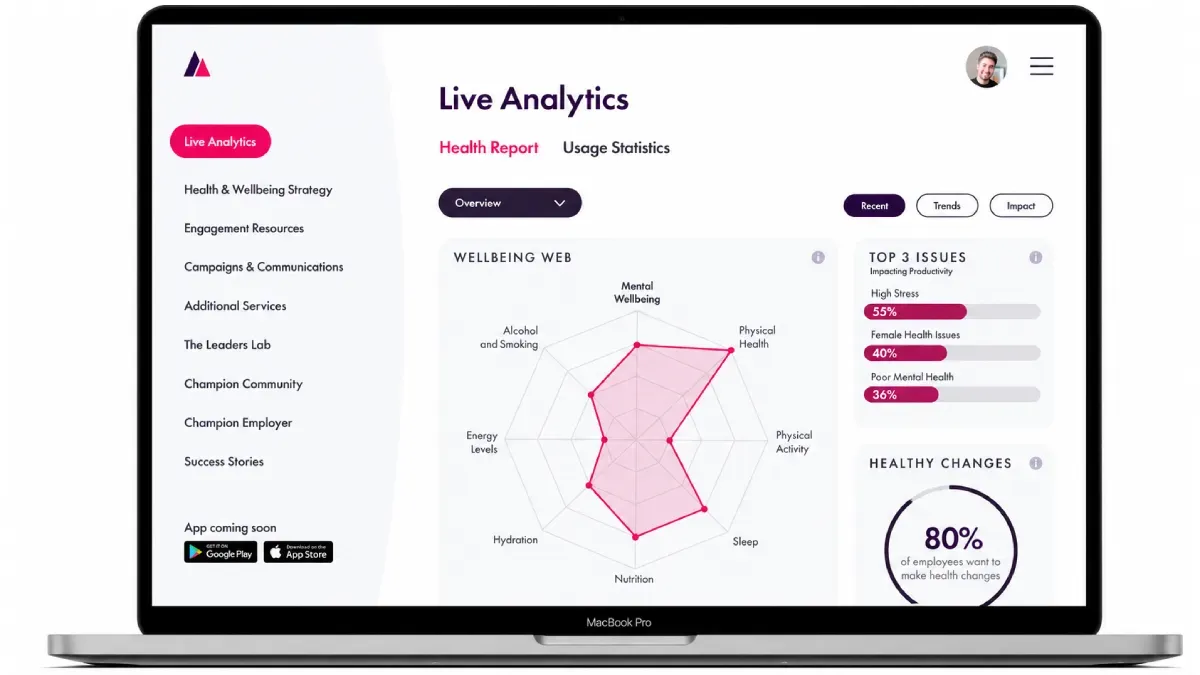
Using this data, S&G’s leadership team gained answers to questions that urgently needed answering:
- What is causing our employees stress?
- Are people seeking support when they need it?
- Where can our wellbeing strategy generate the most impact?
- Is our team experiencing physical pain?
Using their Company Health Report, S&G also filtered data by demographic and department - enabling them to deliver an even more targeted workplace health strategy.
Alongside their dedicated Champion Health Wellbeing Lead, the leadership team at S&G dived into the data to discover the real needs of their people. Among their employees, they discovered that:
- 47% were experiencing musculoskeletal (MSK) pain
- 40% were experiencing chronic pain
- 38% were seeking treatment for MSK pain
The leadership team at S&G now possessed the tools they needed to develop a proactive, data-driven wellbeing strategy.
Driving Better Physical Health
Working closely with their Champion Health Wellbeing Lead, S&G’s leadership team transformed their unique employee wellbeing insights into impactful data-driven action.
They developed and introduced new wellbeing initiatives to improve the physical health of S&G employees, while also enabling those in pain to get support faster.
1. Creating a smooth support journey
S&G integrated their existing wellbeing services into the Champion Health platform. From here, colleagues could now access the support they needed easily, in one place - from physiotherapy to their EAP and beyond.
2. Health-focused campaigns
Riding shotgun with their Champion Health Wellbeing Lead, S&G developed and ran campaigns targeted at key health areas. These campaigns included in-person team events, activity challenges and volunteering opportunities.
They also utilised bespoke expert-led content found on the Champion Health platform. This was integrated into their campaign communications to provide additional support for employee MSK health.
3. Monthly live events
S&G ran monthly live events led by wellbeing experts. These sessions provided guidance around how to improve physical health – as well as signposting towards specific support S&G employees could access.
The Result: Less People in Pain
Champion Health’s insights enabled S&G’s leadership team to track wellbeing trends over time and measure the impact of their wellbeing initiatives. Discover the results below.
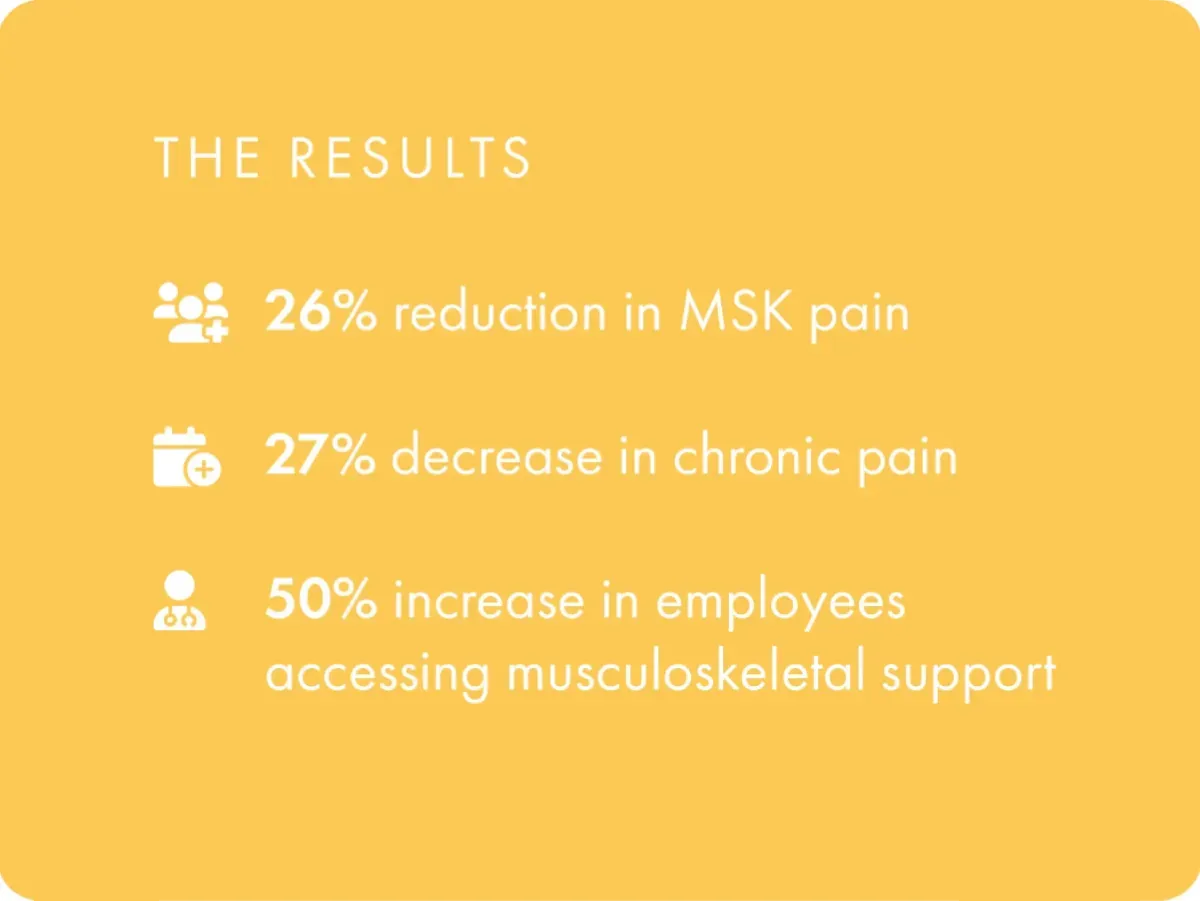
These results demonstrate the success of S&G’s proactive and reactive wellbeing strategy. Not only are less employees experiencing MSK pain, those experiencing MSK pain are accessing the support they need faster.
Every good employer understands that success begins with an energised and healthy workforce with a sense of purpose. S&G proved that and - after partnering with Champion Health - were named as one of the best companies to work for in The Sunday Times. Congratulations to the team at S&G.
Frequently Asked Questions
How does a data-driven employee wellbeing strategy differ from a wellbeing events calendar?
A data-driven employee wellbeing strategy uses identified health needs to decide which activities deserve investment. Mental health and musculoskeletal (MSK) findings help you prioritise prevention, while an events calendar organises delivery. Give each planned initiative a specific risk to address, an accountable owner and an outcome to review.
Can employers plan workforce support if only half their employees complete a health assessment?
Yes. Partial participation can inform initial priorities, but findings describe respondents and may not represent your entire workforce. Compare participation across departments and working patterns before drawing wider conclusions. Start with the needs identified, then give underrepresented groups further opportunities to contribute before committing your whole budget.
How can employers sustain employee engagement with wellbeing after the initial platform launch?
Sustained participation needs visible follow-through after employees share their health concerns. Explain which initiatives their collective feedback informs, then make communications relevant to the support available. Build reminders into existing team channels and give employees time to participate. Track repeat use separately from registrations to identify where interest fades.
How can employers check whether employees can reach existing support through a wellbeing platform?
Test the journey from finding a resource to accessing the relevant service. Check that physiotherapy and employee assistance programme (EAP) information explains eligibility, booking steps and contact routes clearly. Assign someone to maintain those details, and invite feedback on access barriers without asking employees to disclose why they sought help.
How should employers measure whether more employees get the right help?
Measure access to relevant support separately from assessment completion and platform usage. Agree a consistent reporting period and denominator, then review aggregated service uptake alongside reported barriers and changes in health needs. Distinguish percentage increases from percentage-point changes, and establish the baseline before using results to justify further investment.